

Understanding institutional fit and types of faculty positions
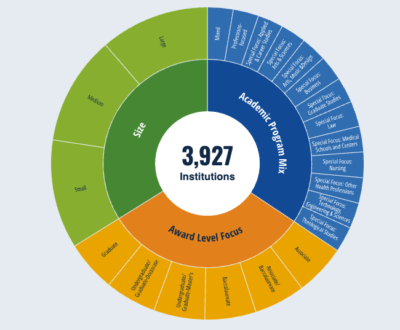
Categories of the Carnegie Classifications for Institutions of Higher Education, captured from their website (link in post).
~June 2, 2026~
If you’re a graduate student or postdoctoral scholar thinking about applying for tenure-track faculty positions, now is a great time to dig into: 1. the types of U.S. higher education positions that exist, 2. the timing of an academic job search, and 3. the terminology for positions (such as tenure-track, open rank, or continuing). We’ll talk about this throughout the 2026-2027 Academic Job Search Series offered by the Graduate School, but here is a brief primer!
Timing and Where to Look
The academic job market is quite cyclical with ads appearing in summer or early fall 2026 for positions that will start in Fall 2027. Usually, faculty jobs are posted for at least a month or state that they will begin reviewing applications on a certain date or else are “Open Until Filled.” Application deadlines commonly fall between September-November. There are many job boards and it is helpful to familiarize yourself with the major ones and any specific to your discipline.
Types of Faculty Titles
Regular full-time faculty job postings are usually advertised as a search for an Assistant Professor of [Field] in the job title, with the details of the job advertisement indicating it is a tenure-track (or sometimes tenure-eligible or tenure-stream position) starting on X date “at the rank of Assistant Professor.” Teaching-focused ongoing positions may also be named something like, “Assistant Professor (Continuing Track)” or Assistant Teaching Professor or “Lecturer with Potential for Security of Employment” in the University of California system. This indicates that there is ongoing review and expectation to reappoint the role, as well as a potential pathway to a tenure-like degree of job security. Visiting Assistant Professors are usually term-limited one-year positions to temporarily fill in for someone on a sabbatical or other leave of absence by teaching the classes they normally offer. You may sometimes see Open Rank searches (Assistant/Associate/Full Professor) or cluster hires (potential for multiple faculty hires starting in a similar time frame and disciplinary area as an institution looks to build its research expertise strategically in a particular area. Be sure to indicate in your cover letter for an open rank posting that you are applying at an Assistant Professor level if you are coming right from graduate school or a postdoctoral position.
Institutional Types and Fit
You may hear the terms “R1 University” to describe highly research-intensive institutions, “liberal arts college” or “Primarily Undergraduate Institution (PUI)” to describe a four-year environment, or “community college” to describe a two-year college. The good news is that there are nearly 4000 U.S. institutions of higher education, and an official classification system to look up their size, level of research activity, and other characteristics (the Carnegie Classification system, pictured in the header image for this article). Ask someone in your field who went to college in the U.S. the name of their institution, and practice looking it up in this website to understand the details. For example, I graduated from Eckerd College, which is classified as a 100% baccalaureate degree-granting institution (four-year degrees only), small, private, highly residential and with a focus on Arts and Sciences degrees. As you explore the types, you may see that some institutions grant just associate’s degrees, some grant Associate’s and baccalaureate degrees, some baccalaureate and master’s, and so on. The type of institution may play a role in what a faculty position at that college or university would look like, in terms of teaching loads, opportunities for research, and other advising or service expectations.
Next Steps
You’ll have the opportunity to explore this more in workshops and panel discussions with faculty from Cornell and beyond, and staff experienced in working with research graduate students and postdocs.
Have a look at the Current Graduate Students module of the Career Development Toolkit, and please don’t hesitate to book an appointment if you are a current Cornell Graduate School student in any discipline who is considering your next steps after graduating.
By Colleen McLinn, Ph.D.